


July 03, 2026
FIFA fotbolls-VM 2026 Cyberhot: Varför Filnivåkryptering Skyddar Känslig Data

Medan att världen bevittnar hur Cristiano Ronaldo skriver historia genom att bli den första spelaren att göra mål i sex raka fotbolls-VM och Sydafrika för första gången någonsin tar sig till slutspelet, har spänningen kring årets fotbolls-VM utan tvekan nått kokpunkten.
Med feststämningen som råder i värdstäderna i Kanada, USA och Mexiko, och de dramatiska målen, ser årets fotbolls-VM ut att bjuda på oförglömliga ögonblick. Samtidigt som världens uppmärksamhet riktas mot turneringen har cyberbrottslingarna höjt insatserna och går till offensiv med farliga bedrägerier.
Bedrägerier kopplade till fotbolls-VM 2026 ökar kraftigt, och enligt källor registrerades över 13 000 nya FIFA-relaterade domäner bara under de första fem månaderna av 2026. med tusentals fler identifierats som misstänkta eller skadliga.
Självfallet är detta globala evenemang ett av de enklaste målen för cyberbrottslingar att utnyttja för att lura fans och andra fotbollsentusiaster. Enligt en rapport från The Hacker News väntas närmare 6 miljoner fans besöka USA, Kanada och Mexiko, och man uppskattas ha tagit emot över 150 miljoner biljettförfrågningar under de första 15 dagarna, vilket innebär att efterfrågan är omkring 30 gånger större än antalet tillgängliga biljetter.
Brist på biljetter; oroliga fans sökande efter rabatter och en chans att se Messi live på planen; Samt pengar som rör sig snabbare än ljusets hastighet – dessa är perfekta måltavlor för cyberbrottslingar, hackare och angripare.
Bedrägerier från fotbolls-VM 2026 ökar i rekord tack vare falska biljetter, nätfiskemeddelanden och bedrägliga reseerbjudanden. Ökningen beror inte bara på att cyberbrottslingar utnyttjar denna händelse; Det är just själva naturen av dessa bedrägerier som vid första anblick ser helt legitima ut, vilket gör det övertygande för fansen att avslöja sina uppgifter, utan eftertanke.
Från VM-streamingbedrägerier till VM-nätfiske till rese- och boendebedrägerier – den här artikeln ger dig en inblick i vad du bör hålla utkik efter under detta fotbolls-VM.
Vanliga Bedrägerier för Fotbolls-VM 2026 Riktade Mot Fans
Föreställ dig att en VM-biljett hamnar i din inkorg med en QR-kod och en registreringslänk. Det ser äkta ut, så du fyller i dina uppgifter, och helt plötsligt är dina betalningsuppgifter, inloggningsuppgifter och personuppgifter i fel händer.
För några år sedan var bedrägerier lättare att upptäcka: dåligt skrivna mejl, konstiga adresser, klumpiga designer. Inte nu längre. Cyberbrottslingar använder idag AI för att skapa polerade webbplatser, deepfake-videor, falskt ljud och övertygande nätfiskemeddelanden som efterliknar legitima organisationer. Teknik kan hjälpa till att upptäcka hot, men fansen måste ändå vara vaksamma.
Här är några av de sätt som cyberbrottslingar utnyttjar fans runt om i världen.
• Falska VM-biljetter och hotellbedrägerier är fortfarande ett av de största hoten.
• Nätfiskebedrägerier från VM inkommer via e-post, sms eller sociala medier.
• Resebedrägerier som fans av fotbolls-VM ofta möter inkluderar falska hotellbokningar.
• Streamingbedrägerier i VM involverar skadliga appar som utlovar gratis livematcher.
• Bedrägerier från VM på sociala medier sprids snabbt genom fejkade konton.
Hur man Upptäcker om en Webbplats är Falsk
Ett av de mest effektiva sätten att skydda sig själv är att snabbt lära sig identifiera falska webbplatser. Här är vad man ska söka efter:
• Var uppmärksam på typosquatting: Den här typen av bedrägeri efterliknar den ursprungliga webbplatsens URL eller sökväg med ett mindre stavfel. I stället för https://www.fifa.com/en kan till exempel ordet "FIFA" i URL:en innehålla en extra bokstav. Användare klickar snabbt eftersom det ser bekant ut, men omdirigeras till angriparens webbplats där de ovetande lämnar ut sina inloggningsuppgifter eftersom webbplatsen verkar vara äkta. Läs mer i den här artikeln: Vad är Typosquatting och Hur Skyddar Kryptering Dina Data?
• Leta efter HTTPS och hänglåsikonen: Legitima sajter använder säkra HTTPS-anslutningar. Men att ha HTTPS enbart garanterar inte att sidan är säker.
• Håll utkik efter misstänkt, dålig och oorganiserad design: Falska webbplatser försöker verkligen se legitima ut. Bilder av låg kvalitet, stavfel som om ett litet barn skrivit innehållet, brutna länkar, oprofessionella layouter, länkar som automatiskt omdirigerar dig till andra webbplatser osv. är alla tecken på en angripares eller bedragarens webbplats.
• Brist på korrekt kontaktinformation: Äkta webbplatser tillhandahåller tydliga kontaktuppgifter, fysiska adresser samt kundsupport. Var försiktig med webbplatser som bara har kontaktformulär.
• Oönskade påtryckningstaktiker: Falska webbplatser använder ofta påtryckningstaktiker. De visar orealistiska erbjudanden, passivt aggressiva rabattuppmaningar och fraser som 'endast 2 biljetter kvar!' för att skynda dig att registrera dig och avslöja dina uppgifter.
Om det inte bara är webbplatser som lurar folk under denna VM-säsong, så har bedragare, angripare och liknande också tagit sina falska biljetter till nästa nivå.
Hur man Upptäcker en Falsk Fotbolls-VM 2026-Biljett
| Kännetecken | Real fotbolls-VM 2026-biljett | Falsk biljett |
|---|---|---|
| Köpkälla | Endast via FIFA.com eller den officiella FIFA-biljettappen | Sociala medier, Telegram, falska webbplatser, obehörig vidareförsäljning |
| Leveransmetod | Överförd endast via den officiella FIFA-biljettappen | Skickad via e-post, WhatsApp eller som bild/skärmdump |
| QR-kod | Dynamisk QR-kod som visas bara timmar före matchen i appen | Statisk bild eller skärmdump (fungerar inte vid insläppet) |
| Pris | Nominellt värde eller inom det officiella andrahandsprisintervallet | Avsevärt under nominellt värde |
| Betalningsmetod | Officiella betalningsgateways | Ovanliga metoder (kryptovaluta, banköverföring, presentkort) |
| Varumärkesbyggande och design | Högkvalitativ varumärkesprofilering med officiella FIFA-element | Dålig kvalitet, stavfel, felaktiga färger eller inkonsekvent varumärkesdesign |
| Säkerhetsfunktioner | Hologram, UV-bläck och specialpapper (för fysiska biljetter) | Vanligtvis saknas eller förfalskas |
| Övergång | Måste överföras via FIFAs officiella biljettöverföringssystem | Säljaren påstår att de kommer att 'överföra' biljetten utanför den officiella appen |
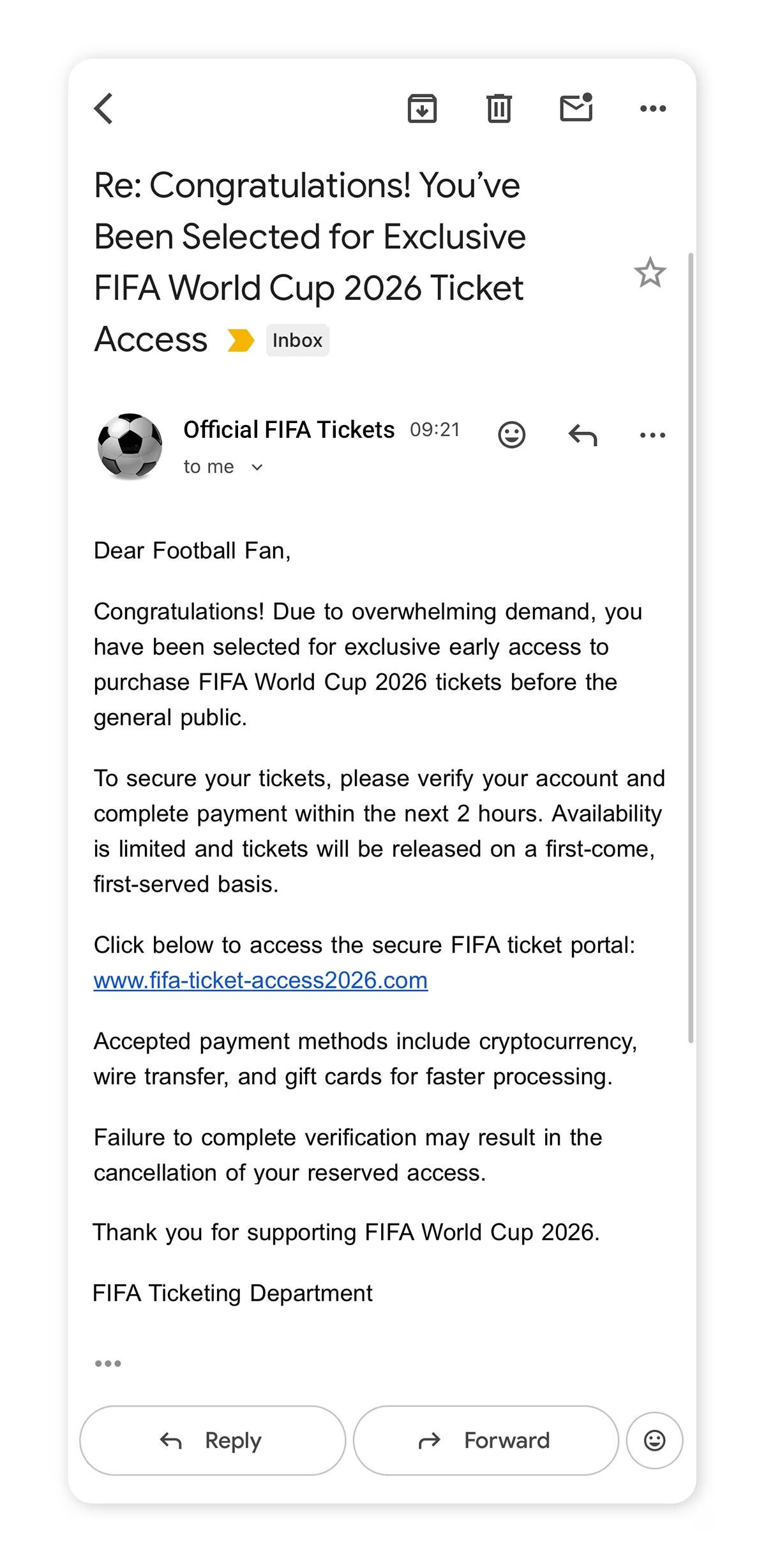
Källa https://us.norton.com/blog/online-scams/world-cup-ticket-scams
Detta exempel visar ett falskt e-postmeddelande, känt som "nätfiskemail"', förklätt till ett legitimt VM-meddelande. Den använder brådska, falsk varumärkesprofilering och psykologisk påtryckning för att lura fans att klicka på skadliga länkar eller dela sina betalningsuppgifter.
Här är varför detta mejl inte är äkta
• Falskt avsändarnamn: Mejlet påstår sig komma från 'Officiella FIFA-biljetter'. Riktig FIFA-kommunikation använder alltid officiella domäner som @fifa.com eller @tickets.fifa.com. Den här använder en generisk eller förfalskad adress.
• Misstänkt länk: Länken (www.fifa-ticket-access2026.com) är inte en officiell FIFA-sida. Bedragare skapar liknande domäner för att stjäla personliga- och betalningsuppgifter.
• Ovanliga betalningsmetoder: Mejlet begär betalning via kryptovaluta, banköverföring eller presentkort. FIFA accepterar endast betalningar via säkra, erkända gateways på sin officiella plattform. Legitima organisationer ber aldrig om kryptovaluta eller presentkort för biljetter.
• Påtryckningstaktik: Uttryck som 'slutföra betalning inom de närmaste 2 timmarna' och 'tillgängligheten är begränsad' syftar till att skapa panik och förhindra logiskt tänkande. Riktiga VM-biljettförsäljningar fungerar inte på detta sätt.
• Falska påståenden om exklusivitet: FIFA kör biljettförsäljningsfaser och återförsäljningsalternativ men skickar aldrig slumpmässiga 'exklusiv tidig åtkomst'-mejl som detta. Officiell information kommer endast via verifierade kanaler och ditt FIFA-konto.
Här är vad du faktiskt måste göra om du är ett riktigt Ronaldo-, Messi- eller Haaland-fan:
Vad Du Bör Göra
Om du får ett mejl som detta:
• Klicka inte på några länkar.
• Dela inte någon personlig- eller betalningsinformation.
• Markera e-postmeddelandet som skräppost och radera det.
• Köp eller administrera endast biljetter via den officiella FIFA-webbplatsen (http://fifa.com/tickets) eller den officiella appen FWC2026 Mobile Tickets.
Bedragare riktar in sig på fans under FIFA World Cup 2026. Var vaksam och verifiera all kommunikation via officiella kanaler för att skydda dig själv.
AxCrypt – Din mittfältare mot VM-bedrägerier
Bedragare vet att fotbollsfans inte vill missa någon action, och de förlitar sig på den spänningen för att få folk att klicka utan att tänka. Men med AxCrypt i ditt team kommer cyberbrottslingar aldrig att få ett öppet mål.
Att använda AxCrypt handlar om mer än att skydda sig själv; Det skapar en ringeffekt av trygghet för dig och de omkring dig. Mitt i onlinebedrägerier under fotbolls-VM kan detta skydd förhindra många problem innan de startar.
AxCrypt Lösenorsdshanterare sparar lösenord endast till legitima länkar, vilket minskar risken för att logga in på falska webbplatser. Det låter dig också säkert dela lösenord, anteckningar och inloggningsuppgifter med familj eller vänner med AES-256-kryptering.
Om du reser genom Kanada, Mexiko eller USA, se till att AxCrypt följer med dig. AxCrypt skyddar dina inloggningsuppgifter, resehandlingar, biljettbekräftelser och personliga filer, även på okända nätverk eller offentligt Wi-Fi. Oavsett om det gäller att hantera bokningar, dela resplaner eller lagra viktiga dokument, lägger kryptering till ett skyddslager gentemot angripare.
10 vanliga frågor: Fotbolls-VM 2026 Bedrägerier och Onlinesäkerhet
1. Hur kan jag undvika biljettbedrägerier för forbolls-VM 2026?
Köp endast biljetter via den officiella FIFA-webbplatsen eller auktoriserade partners. Undvik säljare på sociala medier, Telegram-grupper eller webbplatser som erbjuder kraftigt rabatterade biljetter. Kontrollera alltid URL:en och betala aldrig med kryptovaluta, banköverföringar eller presentkort. Använd AxCrypts lösenordshanterare för att spara webbadresser och lösenord för säker omdirigering.
2. Vilka är de vanligaste nätfiske-bedrägerierna vid VM 2026?
Bedragare skickar falska mejl och meddelanden där de påstår att du har vunnit biljetter eller behöver verifiera ditt konto. Dessa meddelanden innehåller ofta misstänkta länkar. Gå alltid direkt till FIFA:s officiella webbplats istället för att klicka på länkar i meddelanden.
3. Är det säkert att använda offentligt WiFi under fotbolls-VM när man reser?
Offentligt WiFi i arenor och fanszoner kan vara riskabelt. Undvik att använda bankappar eller ange betalningsuppgifter på öppna nätverk. Använd en betrodd VPN, håll din telefons mjukvara uppdaterad och skydda känsliga filer med AxCrypt.
4. Hur upptäcker jag bedrägerier med VM på sociala medier?
Var försiktig med annonser eller meddelanden som erbjuder billiga biljetter eller exklusiv åtkomst. Verifiera kontots trovärdighet, undvik misstänkta länkar och dela aldrig personlig- eller betalningsinformation med overifierade säljare.
5. Hur kan fans skydda personuppgifter online under fotbolls-VM 2026?
Använd starka, unika lösenord, aktivera tvåfaktorsautentisering, undvik att dela ärendeuppgifter offentligt och använd en lösenordshanterare. Om du delar känslig information, kryptera den med AxCrypt.
6. Vad ska jag göra om jag tror att jag har fått en falsk VM-biljett?
Ladda inte ner den från e-posten och försök inte använda biljetten. Kontakta officiell FIFA-support så snabbt som möjligt via dess verifierade webbplats. Övervaka dina bankkonton och anmäl bedrägeriet till lokala myndigheter eller plattformar som http://IC3.gov.
7. Hur kan jag öva på säker surfning under fotbolls-VM?
Spara den officiella URL:en och lösenorden med en säker applikation som AxCrypts lösenordshanterare. Skriv alltid officiella webbplatsadresser direkt istället för att klicka på länkar från e-post eller annonser. Undvik misstänkta popup-fönster och ladda aldrig ner biljetter eller appar från obekräftade källor. Håll dig endast till officiella FIFA-plattformar.
8. Är det säkert att dela digitala biljetter med vänner via meddelandeappar?
Nej. Undvik att skicka biljetter via vanliga meddelandeappar. Använd säkra, krypterade delningsmetoder eller den officiella VM-biljettappens överföringsfunktion för att minska risken för avlyssning av bedragare. Om du måste dela känslig information, kryptera den med AxCrypt.
9. Vilka är de största resebedrägerierna under världsmästerskapet i fotboll?
Vanliga bedrägerier inkluderar falska hotellbokningar, överprisade samåkningserbjudanden och bedrägliga korttidsuthyrningar som annonseras på sociala medier. Boka alltid via pålitliga plattformar och verifiera annonser direkt på officiella webbplatser.
10. Hur kan jag skydda mina konton mot nätfiske under världsmästerskapet i fotboll 2026?
Aktivera tvåfaktorsautentisering och klicka aldrig på länkar som ber dig att 'verifiera' ditt konto. Var särskilt försiktig med meddelanden som påstår akuta biljettärenden. Logga alltid in manuellt via den officiella FIFA-webbplatsen istället för att följa länkar i mejl eller meddelanden.
Låt inte VM-bedragare göra ett enkelt mål!
Falska biljetter. Nätfiske-mejl. Falska reseerbjudanden. Skydda dina lösenord, dokument och personuppgifter med AES-256-kryptering som är utformad för vardaglig användning.
Säkra dina filer, lösenord och delad information på några minuter med AxCrypt.


